
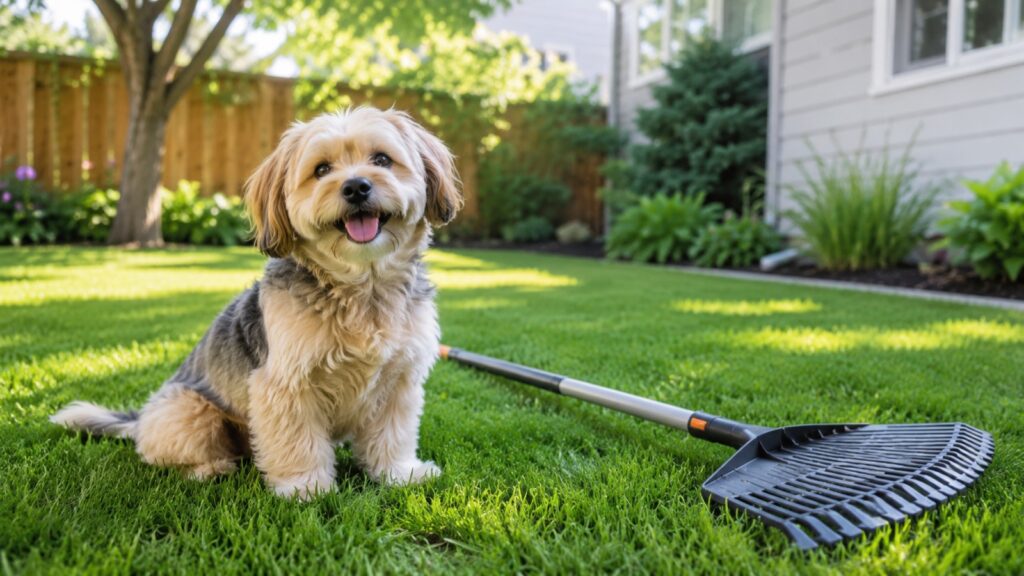
One dog produces a manageable amount of waste. Two, three, or four dogs produce a logistics problem. Anyone who has gone from a single pet to a small pack knows the math is not linear; the yard fills faster, the cleanup takes longer, and the moment you fall a few days behind, the backyard becomes a minefield you no longer want to cross. Multi-dog households play by different rules.
The strategies that keep a one-dog yard tidy simply do not scale. What works for a pack is a system: designated areas, better tools, a realistic schedule, and sometimes outside help. This guide lays out how to manage waste when you have multiple dogs so your yard stays usable and your sanity stays intact, no matter how many tails are wagging.
Why Multi-Dog Waste Is a Different Challenge
With several dogs, volume is only half the issue. The bigger problem is coverage. A single dog tends to favor a few spots, but a pack scatters deposits across the entire yard as they follow each other, mark territory, and react to one another’s habits. That means more ground to patrol, more waste hidden in the grass, and a much shorter window before the accumulation becomes overwhelming.
Different sizes compound it further. A large breed and a small breed produce very different messes, and a tool or bag that handles one may struggle with the other. Managing a pack means planning for the whole range at once.
Establishing a Designated Bathroom Area
The most powerful move a multi-dog owner can make is training the pack to use one area. Concentrating waste in a single mulched or graveled zone transforms cleanup from a full-yard hunt into a quick, contained sweep. It also protects the rest of your lawn from the burn spots and bald patches that multiple dogs would otherwise spread everywhere.
Training takes patience across several dogs, but consistency pays off. Reward use of the zone, lead resistant dogs to it on a leash at first, and keep it clean, since dogs are far more willing to reuse a spot that is not already covered.
Scaling Up Your Tools
Grocery bags and a hand scoop do not survive contact with a multi-dog yard. You need equipment built for volume. A long-handled tool with a wide mouth lets you clear several deposits per trip without constantly bending, and a large-capacity design means fewer stops to empty. If you are upgrading, searching for a Pooper Scooper nearby will surface tools rated for the heavier daily loads a pack generates.
Consider keeping two tools on hand as well. When you are cleaning a large yard after several dogs, having a backup while one is drying or being sanitized keeps the routine from stalling. For packs, redundancy is a feature, not an indulgence.
Building a Realistic Cleanup Schedule
The once-a-week cleanup that a single dog might tolerate is a recipe for disaster with a pack. The volume simply outpaces it, and waste left to accumulate breeds odor, flies, and parasite risk. Daily pickup is the gold standard for multi-dog homes, ideally at the same time each day so it becomes automatic rather than a decision you have to make.
Splitting the duty helps in busy households. Assign zones or days to different family members so no single person shoulders the entire burden, and the yard never goes more than a day without attention.
Managing Odor and Storage
More dogs mean more waste sitting in your bin between trash days, and that can turn a garage or side yard into an unpleasant place fast. Use a dedicated, lidded, and ideally sealable outdoor container to hold bagged waste, and line it well so cleanup of the bin itself stays simple. Emptying it on every collection day, rather than letting it build, keeps odor and pests under control.
Thicker bags matter more here too, because a single tear in a container full of waste from several dogs is a genuinely miserable cleanup. Investing in quality containment on the storage end saves you grief on trash day.
Health Considerations for the Pack
Multiple dogs sharing a yard create a reinfection risk that solo dogs do not face to the same degree. If one dog picks up a parasite, a contaminated yard can pass it to the whole pack in a continuous loop, undoing your deworming efforts. Prompt, thorough removal is the only way to break that cycle across several animals.
Keep every dog on the same veterinary-recommended deworming and prevention schedule, and treat the yard as a shared space that is only as clean as its most-neglected corner. In a pack, one overlooked spot can affect everyone.
When to Call in Reinforcements
There is a point where the volume simply exceeds what a busy owner can keep up with, and that is exactly when professional cleanup earns its keep. Bringing in trusted professionals for recurring service ensures a multi-dog yard gets cleared on a reliable schedule regardless of your week, which is often the difference between a usable yard and one you avoid. Many services price by yard size and dog count, so the quotes are transparent.
If you prefer the DIY route but need better equipment first, comparing options from a reputable Pooper scooper company is a sensible starting point before your pack outgrows your current setup. Either way, the goal is a system that keeps pace with the volume your dogs actually produce.
Key Takeaways
- Multiple dogs scatter waste across the whole yard, not just a few spots.
- A designated bathroom area concentrates cleanup and protects your lawn.
- Volume demands heavier-duty tools and often a backup on hand.
- Daily pickup, split among household members, keeps pace with a pack.
- Sealed storage and thick bags control odor and prevent messy tears.
- Shared yards create reinfection risk, so keep every dog on prevention.
Turn Pack Chaos Into a Simple System
Managing waste for several dogs is not about working harder; it is about working systematically. Train the pack to a single area, arm yourself with tools built for volume, commit to a daily rhythm, and store waste in sealed containment. Add professional help when the numbers demand it, and the yard that once felt impossible becomes routine. A multi-dog household can absolutely have a clean, usable backyard, provided the system scales as gracefully as the pack has grown.